
Psychiatry

paranoid-personality-disorder-1
Depression is a major psychiatric disorder and one the most common psychiatric disorders encountered in clinical practice…
histrionic-personality-disorder
A disorder of the mind that affects how you think, feel and behave. Its symptoms are often called either positive
bipolar
Bipolar affective disorder is a mood disorder in which the patient suffers from both depressive episodes and manic/hypomanic…
alcohol
Benzodiazepine are a group of drugs which are commonly used as sleeping pills. This group contains about 20 specific drugs…
alcohol
Cigarette smoke is a composition of gas and small particles. There are over 4000 chemicals in tobacco smoke many of
alcohol
Cannabis is a drug that comes from the cannabis sativa plant. The active ingredient is called Delta -9 tetrahydrocannabinol…
alcohol
Alcohol is produced by fermentation of liquids containing sugar and starch. Alcoholic drinks vary in colour and tast because…
sexual-disorders
A persistent or recurrent pattern of ejaculation occurring during partnered sexual activity within approximately 1 minute…
sexual-disorders
Persistently or recurrently deficient (or absent) sexual/erotic thoughts or fantasies and desire for sexual activity. The judgment of deficiency is
sexual-disorders
Lack of, or significantly reduced, sexual interest/arousal, as manifested by at least three of the following:
sexual-disorders
Presence of either of the following symptoms and experienced on almost all or all (approximately 75%-100%) occasions of sexual activity
sexual-disorders
At least one of the three following symptoms must be experienced on almost all or all (approximately 75%-100%) occasions of
sexual-disorders
Either of the following symptoms must be experienced on almost all or all occasions (approximately 75%-100%) of partnered sexual activity
ocd
Preoccupation with one or more perceived defects or flaws in physical appearance that are not observable or appear slight to
obsessive-compulsive-personality-disorder
Persistent difficulty discarding or parting with possessions, regardless of their actual value. This difficulty is due to a perceived need
manasvi_icon

No health without mental health!

Dr. Vijayakumar D.R MBBS, DPM, DNB (NIMHANS), CCST (UK)

  • psychiatry
  • psychiatry degree
  • psychiatry examples
  • psychiatry vs psychology
  • psychiatry salary
  • psychiatry meaning in hindi
  • psychiatry near me
  • psychiatry pronunciation
  • psychiatric disorders
  • psychiatrist in bangalore
  • best psychiatrist in bangalore nimhans
  • psychiatrist vs psychologist
  • best psychiatrist hospital in bangalore
  • psychiatrist near me
  • psychiatry meaning
  • psychiatry books
  • psychiatry and psychology
  • psychiatry research
  • psychiatry definition
  • psychiatry and mental health
  • psychiatry articles
  • a psychiatry clinic
  • psychiatry bangalore
  • psychiatry clinic
  • psychiatry counselling
  • psychiatry clinic near me
  • psychiatry doctor near me
  • psychiatry doctors
  • psychiatric emergencies
  • psychiatry experts
  • e-psychiatry cost
  • e-psychiatry phone number
  • psychiatry group
  • psychiatry genius
  • psychiatry hospitals in bangalore
  • psychiatry hospitals
  • psychiatry in bangalore
  • psychiatry in india
  • psychiatry logo
  • psychiatry latest news
  • psychiatry medicine
  • psychiatry meaning in english
  • psychiatry news
  • psychiatry neet pg
  • psychiatry notes
  • psychiatry online
  • psychiatry online courses
  • psychiatry ocd
  • psychiatry ppt
  • psychiatry pdf
  • psychiatry quotes
  • psychiatry study
  • psychiatry textbook
  • psychiatry terms
  • psychiatry topics
  • psychiatry video lectures
  • psychiatry wikipedia
  • psychiatry youtube
  • psychiatrist meaning
  • psychiatrist doctor
  • psychiatrist online
  • psychiatrist appointment
  • psychiatrist appointment near me
  • psychiatrist around me
  • psychiatrist apollo hospital
  • psychiatrist and psychologist
  • psychiatrist at bangalore
  • a psychiatrist treats
  • a psychiatrist near me
  • a psychiatrist is a therapist
  • a psychiatrist meaning
  • psychiatrist bangalore
  • psychiatrist books
  • psychiatrist best in bangalore
  • psychiatrist best
  • psychiatrist best in india
  • psychiatrist best near me
  • psychiatrist consultation
  • psychiatrist counselling
  • psychiatrist clinic near me
  • psychiatrist consultation fee in bangalore
  • psychiatrist consultation online
  • psychiatrist counselling in bangalore
  • psychiatrist doctor near me
  • psychiatrist doctor in bangalore
  • psychiatrist doctor in mangalore
  • psychiatrist definition
  • psychiatrist email
  • psychiatrist for kids
  • psychiatrist for depression
  • psychiatrist fees
  • psychiatrist for kids near me
  • psychiatrist fees in bangalore
  • psychiatrist for depression in bangalore
  • psychiatrist for children
  • psychiatrist hospital in bangalore
  • psychiatrist help
  • psychiatric hospital
  • psychiatrist i can see today
  • psychiatrist i need
  • psychiatrist i went to
  • psychiatrist live chat
  • psychiatrist medicine
  • psychiatrist online chat
  • psychiatrist patient
  • psychiatrist psychologist
  • psychiatrist prescription
  • psychiatric problem
  • psychiatrist phone number
  • psychiatrists
  • psychiatrists near me
  • psychiatrist therapist near me
  • psychiatrist test
  • psychiatrist therapy
  • psychiatrist treats
  • psychiatrist telugu
  • psychiatrist types
  • psychiatric treatment
  • psychiatrist visiting card
  • psychiatrist video
  • psychiatrist vacancy
  • psychiatrist work
  • psychiatrist wiki
  • psychiatrist website
  • psychiatrist what do they do
  • psychiatrist therapist in bangalore

Depression

Psychiatry

Depression

Depression is a major psychiatric disorder and one the most common psychiatric disorders encountered in clinical practice. It is more common in women than men. Lifetime incidence of major depressive disorder is 20% in women and about 12% in men. In other words one in five women will suffer from depression some time in their lifetime.

What are the symptoms of depression?

There are definite criteria to diagnose if a person is suffering from depression.

Some of the symptoms are

  1. Feeling sad for most of the time
  2. No interest in previously pleasurable activities
  3. Impaired concentration
  4. Disturbed sleep
  5. Decreased or increased appetite
  6. Loss or gain in weight
  7. Hopelessness, worthlessness, helplessness ( negative thoughts)
  8. Guilt feelings
  9. Easy fatigability
  10. Suicidal ideations or attempt
  11. At times anxiety symptom
  12. Being aloof
  13. Impaired socio- occupational functioning
  14. Multiple physical complaints
  15. Decreased sexual functioning

The psychiatrist will make a diagnosis of depression based on the duration and number of symptoms the patient has. You need not have all the symptoms to make a diagnosis of depression. The duration of symptoms should be at least 2 weeks.

B. What are the causes for depression?

Depression is caused by number of factors

  1. Genetics: Depression runs in families. Children of parents with depression have a higher chance of getting depression than normal population.
  2. Chemicals: Depression can be caused by dysfunctions in certain chemicals called neurotransmitters in the brain. The common neurotransmitters are serotonin, dopamine and nor epinephrine. Other chemicals can also be involved.
  3. People suffering from physical problems like hypothyroidism are more prone to depression. Patients with chronic illness are also more prone to depression. Beta blockers, alcohol and other illicit substances.
  4. Stress: major life events like death, loss of employment, debts, financial problems, divorce, break ups etc can increase the chances of depression in susceptible people.

To be noted that you do not have to have any stress in order to suffer from depression, a significant number of patients suffer from depression even without any stress. In other words even a person having all his external needs met can suffer from depression.

C. What is the treatment for depression?

Depression can be treated with medications and /or Cognitive behaviour therapy.

  1. Medications: Medications are a very effective way of treating depression. They are numerous groups of anti depressants which can be used. The medications act on the neurotransmitters serotonin and nor epinephrine. The commonest group of medications used for depression now a day is called serotonin specific re uptake inhibitors (SSRI).
  2. Cognitive behaviour therapy: CBT is used along with medications for the treatment of depression. In cases of mild depression it can be used as the sole modality of treatment.

D. Will patients with depression become completely alright?

In general depression has a good prognosis which means a significant number of patients will become completely alright if treated correctly.

E. How long do you have to take medications for depression?

Psychiatrists prescribe medications for at least 6 months for depression before considering reducing the dosage of medications gradually. During this period it is important to see your psychiatrist regularly to monitor for relapse in symptoms and side effects.

[INSERT_ELEMENTOR id="9770"]

Schizophrenia

Psychiatry

Schizophrenia

What is schizophrenia?

A disorder of the mind that affects how you think, feel and behave. Its symptoms are often called either ‘positive’ or ‘negative’. It is an illness which can be gradually progressive and can affect any gender, race, caste, socioeconomic status and any geographic location.

Signs and symptoms of schizophrenia

Early symptoms (prodrome )

It presents itself gradually and the initial symptoms could be behavioural changes which the near and dear ones of the person notices, like being withdrawn, spending a lot of time indoor, impaired attention and concentration, sleep disturbances, impaired socio occupational functioning and depressed mood.

You find it harder to concentrate – it’s more and more difficult to:

  1. finish an article in the newspaper or watch a TV programme to the end
  2. keep up with your studies at college
  3. keep your mind on your job at work.

Your thoughts wander. You drift from idea to idea – but there’s no clear connection between them. After a minute or two you can’t remember what you were originally trying to think about. Some people describe their thoughts as being ‘hazy’ when this is happening. When your thoughts are disconnected in this way, it can be hard for other people to understand you.

‘Positive’ symptoms

These are unusual experiences which should not be there.

Hallucinations

A hallucination happens when you hear, smell, feel or see something – but it isn’t caused by anything (or anybody) around you.. The commonest one is hearing voices.

They are false perceptions in the absence of a stimulus.

What do voices sound like?

They sound very real. They usually seem to be coming from outside you, although other people can’t hear them. You may hear them coming from different places, or they may seem to come from a particular place or thing. Voices can talk to you directly or talk to each other about you – it can be like over-hearing a conversation. They are often rude, critical, abusive or just plain irritating.

How do people react to them?

You may try to ignore them, talk back to them – or even shout back at them if they are particularly loud or irritating. You may feel that you have to do what they tell you, even if you know you shouldn’t. You may wonder if they are they coming from hidden microphones, from loudspeakers, or the spirit world.

Where do they come from?

Voices are not imaginary – you really do hear them – but they are created by the mind. Scans have shown that the part of the brain that ‘lights up’ when you hear voices is the same area that is active when you talk, or form words in your mind. The brain seems to mistake some of your thoughts, or ‘inner speech’, for voices coming from outside you.

The voices may comment on the person’s action continuously. (running commentary)

Two or more voices talking about the person usually derogatory in nature ( 3rd person auditory hallucinations)

Voice may talk directly to the person( 2nd person auditory hallucination) or give them commands which may be followed by the person .

It can sometimes feel like when you are trying to make a phone call in a very crowded and noisy place. The person can feel scared by these experiences and become withdrawn.

Other hallucination

You may see things that aren’t there, or may smell or taste things that aren’t there. Some people have uncomfortable or painful feelings in their body, or feelings of being touched or hit.

Delusions

A delusion happens when you believe something – and are completely sure of it – while other people think you have misunderstood what is happening. It’s as though you see things in a completely different way from everyone else. You have no doubts, but other people see your belief as mistaken, unrealistic or strange. If you do try to talk about your ideas with someone, your reasons don’t make sense to them, or you can’t explain – you ‘just know’. It’s an idea, or set of ideas, that can’t be explained as part of your culture, background or religion.

Delusion is a false belief, firm , fixed, unshakable and which is not cultural accepted .

example of delusions

‘Paranoid’ delusions

These are ideas that make you feel persecuted or harassed. They may be:

  1. unusual – it feels as though the government is spying on you. You may think that others are influencing you with special powers or technology.
  2. Feeling of being spied upon by using cameras
  3. Belief that your partner is unfaithful. (delusion of infidality)
  4. Feeling persecuted.
  5. Feeling that your thoughts are being known by others
  6. Feeling that your thoughts are being broadcast on the TV, radio and newspaper.
  7. Feeling that thoughts are being inserted and withdrawn from your brain
  8. Feeling that you have special powers, excessive wealth etc
  9. Feeling that people are plotting against and trying to harm them
  10. Feeling that they are controlled by others and external agencies

You feel that:

  1. your thoughts have suddenly disappeared – as though someone has taken them out of your mind;
  2. your thoughts feel as though they are not yours – it’s as though someone else has put them into your mind;
  3. your body is being taken over, or that you are being controlled like a puppet or a 

Some people explain these experiences by thinking it’s the radio, television or laser beams, or that a device has been implanted in them. Other people blame witchcraft, angry spirits, God or the Devil.

Ideas of reference

you start to see special meanings in ordinary, day-to-day events. It feels as though things are specially connected to you – that radio or TV programmes are about you, or that someone is telling you things in odd ways, for example, through the colours of cars passing in the street.

‘Negative’ symptoms

  1. You start to lose your normal thoughts, feelings and motivations.
  2. You lose interest in life. Your energy, emotions and ‘get-up-and-go’ just drain away. It’s hard to feel excited or enthusiastic about anything.
  3. You can’t concentrate.
  4. You don’t bother to get up or go out of the house.
  5. You stop washing or tidying, or keeping your clothes clean.
  6. You feel uncomfortable with people.

People can find it hard to understand that negative symptoms are really symptoms – not just laziness. This can make it difficult for both you and your family. Your family feel that you just need to pull yourself together. You can’t explain that … you just can’t. Negative symptoms are less dramatic than positive symptoms, but can be really hard to live with.

Does everyone with schizophrenia have all these symptoms?

No you need not have all the symptoms. You can hear voices and have negative symptoms, but may not have delusional ideas. Some people with delusional ideas seem to have very few negative symptoms.

Psychiatrists use a definite set of criteria as given in the ICD-10 (international classification of diseases) or DSM -4 ( diagnostic and statistical manual) to diagnose schizophrenia.

Loss of “insight”

It feels as though everyone else is wrong, that they just can’t understand the things that you can. You feel that the problem is with the rest of the world, not with you. You do not believe that you have an illness. Hence it can lead to non compliance with medication and not visiting the doctor.

How common is schizophrenia?

It affects around 1 in every 100 people over the course of their life. It affects about 1% of the world population.

Who gets it?

It affects men and women equally. It affects any gender, race, caste, socioeconomic status and any geographic location.Women are affected later than men. These symptoms usually start in the early twenties .

What causes schizophrenia?

We don’t yet know for sure. It is probably a combination of several different things, which will be different for different people.

Stress-vulnerability-coping model best describes why people get schizophrenia.

Genes

Although only 1 in 100 people get schizophrenia, about 1 in 10 people with schizophrenia have a parent with the illness.

Twins

An identical twin has exactly the same genetic make-up as his or her brother or sister, down to the smallest piece of DNA. If one identical twin has schizophrenia, their twin has about a 50:50 chance of having it too.

Non-identical twins have a different genetic make-up to each other. If one of them has schizophrenia, the risk to the other twin is just slightly more than for any other brother or sister. These findings are much the same even if twins are adopted and brought up in different families.

 Relatives with schizophrenia Chance of developing schizophrenia
 None 1 in 100
 1 parent 1 in 10
 1 identical twin (same genetic make up) 1 in 2
 1 non-identical twin (different genetic make up) 1 in 8

Certain chemicals called neurotransmittors in the brain are effected which causes the symptoms of schizophrenia. Dopamine and serotonin are the most common neurotransmittors implicated in the causation of schizophrenia.

Brain damage

Brain scans show that there are differences in the brains of some people with schizophrenia – but not in others. Where this is the case, it may be that parts of the brain have not grown normally because of:

  1. a problem during birth that stops the baby’s brain from getting enough oxygen
  2. a virus infection during the early months of pregnancy.

Drugs and alcohol

Sometimes, street drugs seem to bring on schizophrenia.

Amphetamines can give you psychotic symptoms, but they usually stop when you stop taking the amphetamines. We don’t yet know whether these drugs, on their own, can trigger off a long-term illness, but they may do if you are vulnerable.

It can be easy to use drugs or alcohol to cope with symptoms, but this usually makes things worse.

Cannabis

  1. The heavy use of cannabis seems to double the risk of developing schizophrenia. New research has shown that the stronger forms of cannabis, may increase this risk.
  2. It’s more likely if you start using cannabis in your early teens.
  3. If you have smoked it frequently (more than 50 times) during your teens, the effect is even stronger – you are 6 times more likely to develop schizophrenia.

Stress

Stress can precipitate an episode or worsen the symptoms of schizophrenia.

Family problems

Family problems does not cause schizophrenia but it can worsen the symptoms of schizophrenia. Hence therapy will be needed to prevent relapse.

Do people with schizophrenia become violent ?

A few people with schizophrenia do become violent – they usually hurt themselves but sometimes hurt other people. This can be caused by feelings of persecution or voices telling them to do it – often a combination of the two. It is much more likely if the person has used drugs or alcohol.

What is the treatment for schizophrenia ?

Schizophrenia is treated with medications and psychological treatments. Medications are the first line of treatment for symptoms of schizophrenia.

If you have the symptoms of schizophrenia for the first time, you should start medication as soon as possible.

You will have to consult a psychiatrist and he will put on one of the various medications called antipsychotics.

What are the medications for schizophrenia?

Psychiatrists will use one of the numerous medications avaiable for the treatment of schizophrenia. These medications are collectively called antipsychotics. Some of the antipsychotics are risperidone, olanzapine, clozapine,quitiapine, aripiprzole etc. For more details kindly look up the antipsychotic section of the website.

Why take medication?

Medication reduces the effects of the symptoms on your life. Medication should:

  1. reduce delusions and hallucinations gradually, over a period of a few weeks;
  2. help your thoughts to be clearer;
  3. increase your motivation and ability to look after yourself you

You will initially be adviced to see the psychiatrist once in 2 weeks ( sometimes 1 week) to monitor the effects and side effects of the medication . Medications will be increased on an average once in 2 weeks if the improvement is not optimal.

How well does medication work?

Majority of the patients who take medications in the correct dosage and adequate duration of time will see a reduction in the symptoms. Side effects of medications must be monitored at treated to improve the quality of life of the patient.

How long will I have to take medication for?

  1. Most psychiatrists will suggest that you take medication for a long time.
  2. If you want to reduce or stop your medication, discuss this with your doctor.
  3. Reduce your medication gradually. If you do this, you can notice any symptoms returning before you become really unwell again.

What happens when I stop taking medication?

The symptoms will usually come back – not immediately, but usually within 3 – 6 months.

Getting back to normal

Schizophrenia can make everyday life hard to deal with. This may or may not be due to the symptoms. Sometimes you may just get out of the habit of doing things for yourself. It can be difficult to get back to doing ordinary things like washing, answering the door, shopping, making a phone call or chatting with a friend. Hence it is advisable to maintain a regular daily schedule in spite of the illness and medication side effects.

Psychological (or talking) treatments

Cognitive Behavioural Therapy (CBT)

This can be done by clinical psychologists, psychiatrists or nurse therapists. It helps you to:

  1. concentrate on the problems that you find most difficult. These could be thoughts, hallucinations or feelings that you are being persecuted.
  2. look at how you tend to think about them – your ‘thinking habits’.
  3. look at how you react to them – your ‘behaving habits’.
  4. look at how your thinking or behaving habits affect you.
  5. work out if any of these thinking or behaving habits are unrealistic or unhelpful.
  6. work out more helpful ways of thinking about these things or reacting to them.
  7. try out new ways of thinking and behaving.
  8. see if these work. If they do, to help you use them regularly. If they don’t, to find better ones that do work for you.

This kind of therapy can help you to feel better about yourself and to learn new ways of solving problems. We now know that CBT can also help you to control troublesome hallucinations or delusional ideas. Most people have between 8 and 20 sessions, each lasting about 1 hour. To help the symptoms of schizophrenia, you may need to carry on with ‘booster’ courses from time to time.

Try to avoid things that make you worse, such as:

  1. stressful situations
  2. using street drugs or alcohol.
  3. disagreements with family, friends or neighbours.

Learn relaxation techniques.

Make sure you regularly do something you enjoy.

What are the other ways to reduce symptoms?

Along with medications the following can be tried to reduce symptoms

  1. spend time with other people
  2. keep busy
  3. listen to a personal stereo (TV and radio also work but may annoy your family or neighbours).
  4. remind yourself that your voices can’t harm you
  5. remind yourself that your voices don’t have any power over you and can’t force you to do anything you don’t want to.

Look after your body. People with schizophrenia have poorer health than others, so it’s worth looking after yourself:

  1. try to eat a balanced diet, with lots of fresh vegetables and fruit
  2. try not to smoke – cigarettes harm your lungs, your heart, your circulation and your stomach
  3. take some regular exercise, even if it’s only 20 minutes out walking every day. Regular vigorous exercise (double your pulse rate for 20 minutes 3 times a week) can help improve your mood.

Doesn’t schizophrenia make people dangerous?

People who suffer from schizophrenia are usually not dangerous. Any violent behaviour is usually sparked off by street drugs or alcohol. This is similar to the situation with people who don’t suffer from schizophrenia.

Although there is a higher risk of violent behaviour if you have schizophrenia, it is very small compared to the effects of drugs and alcohol in our society. People with schizophrenia are far more likely to be harmed by other people than other people are to be harmed by them.

Do patients with schizophrenia get better ?

One third of patients suffering from schizophrenia improve completely, 1/3 approximately have a few residual symptoms and are able to function resonable well but 1/3 of the patients have a gradual decline in their functioning with residual symptoms and they need assistance in life.

[INSERT_ELEMENTOR id="9770"]

Bipolar affective disorder

Psychiatry

Bipolar affective disorder (BPAD)

Bipolar affective disorder is a mood disorder in which the patient suffers from both depressive episodes and manic/hypomanic episodes. It was called manic depressive psychosis in the past. Patients suffer from intense mood swings in this disorder.

What are the symptoms of BPAD?

The patients have both depressive and manic symptoms

Symptoms suggestive of mania are

  1. Felling happy ( elated or euphoric)
  2. Increased self esteem
  3. Decreased need for sleep- feels rested even after sleeping for only 3 hrs
  4. Talks excessively and it is difficult to stop the patient from talking
  5. Gets multiple ideas and thoughts ( racing thoughts )
  6. Jumps from one topic to another while speaking
  7. Easily distractible and concentration is impaired
  8. Spends more money than usual/ spending sprees
  9. Increased sexual drive
  10. Is over active and over familiar with people
  11. Has great ideas and plans which are not practical
  12. They can hear voices which no one else can hear
  13. Can have grandiose delusions like claiming to be god or a very prominent person in the society
  14. Can be irritable
  15. Does not complete tasks given and jumps from one task to another.
    The duration of the symptoms should be at least one week.
    The symptoms of depression are as document under the depression section.

What causes BPAD?

The exact cause of BPAD is still not known but some of the factors are

  1. Genetic factors : Bipolar illness is known to run in families
  2. Dysfunction in certain chemicals in the brain called neurotransmitters can lead to BPAD. Some of the neurotransmitters implicated are nor epinephrine and serotonin.
  3. Life events and stress can precipitate an episode of the illness in vulnerable individuals

What is the course of BPAD?

Patients usually experience their first episode in their early 20s. Manic episode typically begins suddenly with a rapid escalation of symptoms over a few days; hence it is advisable to see a psychiatrist at the earliest. The manic episode normally responds well to treatment and the patient generally has periods when he has no symptoms of the illness. However some patients may continue to have persistent symptoms without coming back to pre morbid levels.

What is the treatment for BPAD?

The main stay of treatment for BPAD is medications.

If a patient has a manic episode and also if he has psychotic symptoms he is treated with antipsychotic medications like olanzapine, quitipine, risperidon etc.

If a patient has depressive symptoms he is treated with antidepressants like serotonin specific reuptake inhibitors like sertraline, fluoxetine, escitalopram etc.

Patients are also given a group of medication called mood stabilizers like lithium, sodium valproate, carbamezapine, lamotrigine etc. Mood stabilizers help in treating the mood swings much like how a voltage stabilizer works, if the mood goes high it gets it down, if it goes low it gets it up.

Mood stabilizers can also prevent future episodes in some patients or reduce the intensity of the episode or increase the gap between episodes.

In addition to medications your psychiatrist will help you identify early warning symptoms of an episode so that help can be sought at the earliest.

Remember the earlier the patient is taken to a doctor the better and faster is the response to medication.

How long are medications given for BPAD?

Mood stabilizers are normally given for at least 2 years after one episode and up to five years with multiple episodes.

Remember an untreated episode of mania can last up to 6 months on an average and an untreated episode of depression on an average for 12 months.

What is a rapid cycler ?

A person who has BPAD who gets 4 or more episodes of the illness in a year is called a rapid cycler.

How can carers help?

It is of paramount importance that the carer of a person who is suffering from BPAD learns about the illness and its manifestation. They should be aware of the early warning signs and seek help at the earliest. They should also keep a watch on the patients spending during an episode and be aware of his credit card expenditure. If possible methods to stop access to money and credit cards should be decided with the patient when he is doing well and plan executed if needed.

[INSERT_ELEMENTOR id="9770"]

Sleeping Pills

Psychiatry

Sleeping Pills

Benzodiazepines.

What are benzodiazepines?

Benzodiazepine are a group of drugs which are commonly used as sleeping pills. This group contains about 20 specific drugs which vary in how long they work, how much sedation it provides and how much it helps to reduce anxiety symptoms.

What are they used for?

Benzodiazepines are classified as sedatives or anxiolytics (for relieving anxiety).

They are commonly used to reduce anxiety and for sedation. Sometimes they can also be used to treat seizures, alcohol withdrawal, aggression, and to relax the muscles.

Are benzodiazepines addictive?

Yes, benzodiazepine medications can cause dependence and hence should not be used for long term except under certain special circumstances and only by a specialist doctor.

It should never be used without prescription or as self medication.

Normally it is used up to 2-3 weeks and gradually tapered and stopped.

It is to be noted it is one of the most common prescription medications abused by patients.

What are the long term side effects of benzodiazepines?

Benzodiazepines can cause drowsiness, lack of motivation, memory impairment, and changes in emotional response, paradoxical anxiety, irritability, headaches, and aggression, increased risks of fall and accidents, confusion, lack of coordination, depression and slurred speech.

Benzodiazepine must always be taken under medical supervision.

What are the commonly used benzodiazepines in India?

Chemical nameBrand names
AlprazolamAnxit,restyl,trika,alprax
DiazepamCalmpose,valium
LorazepamAtivan,Lopez,Trapex
OxazepamSerepax
ChlordiazepoxideLibirium
ClobozamLobozam,frisium
ClonazepamPetril

What are the withdrawal symptoms of benzodiazepine?

If a person dependent on benzodiazepines or if they cut the dose drastically they will experience withdrawal symptoms as the body has to readjust to functioning without the drug. 

Withdrawal symptoms vary from person to person. It can last for weeks to months.

Withdrawal symptoms can include headache, sweating, tension, anxiety, confusion, dizziness, nausea, poor appetite, disturbed sleep, depression, delirium and at times seizures. Hence benzodiazepines must gradually withdrawn and not stopped or reduced suddenly.

Effects of benzodiazepines on pregnancy?

Benzodiazepines taken during pregnancy can cross the placental barrier and can affect the growth and development of the foetus. If taking a prescription of benzodiazepines check with your doctor before altering the dosage.

Points to remember when on benzodiazepines.

  1. If concerned about the dosage, it is best to talk first with your prescribing doctor. Remember, there is no one set dosage suitable for everyone.
  2. If you haven’t seen your doctor for a while make an appointment to have the medication reviewed and to discuss alternatives.
  3. Consider if the medication is needed and discuss alternatives with your doctor.
  4. Consult a psychiatrist if you are dependent on benzodiazepines.
[INSERT_ELEMENTOR id="9770"]

Smoking Tobacco

Psychiatry

Smoking Tobacco

Tobacco USE

What are the ingredients of tobacco smoke?

Cigarette smoke is a composition of gas and small particles. There are over 4000 chemicals in tobacco smoke many of which are poisonous and 43 known cancer causing chemicals.

  1. Nicotine: Nicotine is the drug in tobacco that causes addiction among smokers. It is one of the most addicting substance and more addicting than heroin. Nicotine is a poison; swallowing one drop of pure nicotine can kill an adult.
  2. Tar: When a cigarette burns tar is released. It can cause lung and throat cancer in smokers
  3. Carbon monoxide: it is a poisonous gas which is taken up more readily by the lung than oxygen. It is found in the exhaust gas of vehicles.
  4. Cancer causing chemicals include nitrosamines, cadmium, nickel etc
  5. Acetone which is found in nail polish remover
  6. Acetic acid found in vinegar
  7. Ammonia found in floor cleaners
  8. Arsenic a known poison
  9. Butane found in cigarette lighter fluid
  10. Formalin a tissue preservative
  11. Hydrogen cyanide a poison
  12. Methanol found in rocket fuel
  13. Naphthalene found in moth balls
  14. Toluene an industrial solvent

Point to ponder: a smoker who consumes an average of 20 cigarettes per day inhales these 4000 substances more than 70,000 times per year.

Next time you see or use a cigarette remember what is getting into your body.

What are the health related issues with tobacco usage?

Tobacco affects all the systems in the body. Some of the illness caused by tobacco smoking is

  1. Various types of cancers like lung, mouth, esophagus (food pipe), bladder, stomach etc
  2. Smoking is one of the major risk factor for coronary artery disease. It is responsible for at least 20% of deaths due to coronary artery disease.
  3. Arteriosclerosis
  4. Heart failure
  5. Strokes
  6. Decreases the blood supply to the tips of the toes and fingers leading to death of the tips and may lead to amputations. Buerger’s disease)
  7. Can cause sexual dysfunction
  8. Pregnant mothers smoking tobacco can low birth weight infants, higher risk of cleft palate and lip ( opening in the lip and palate due non fusion of the two separate parts )
  9. Lowers the sperm count in men
  10. Lowers the immune system

What are the effects of smoking?

The effects of smoking will vary from person to person and depends on,

  1. The number of cigarettes smoked per day
  2. The age when the person began smoking
  3. The number of years of smoking
  4. A person’s susceptibility to chemicals in the tobacco

Immediate effects

  1. Smoking one cigarette immediately raises the blood pressure and heart rate. It decreases the blood flow to the body extremities like the figure and toes
  2. stimulates the brain for a short time and then reduces
  3. causes dizziness,nausea,watery eyes and acidity in the stomach
  4. appetite ,taste and smell are altered

Other effects

  1. they can experience shortness of breadth, persistent coughs, reduced fitness, yellow stains of the teeth a
  2. Lowers the immune system and they are more prone to infections
  3. Facial wrinkles appear much earlier

What are the withdrawal symptoms of nicotine (tobacco)?

People who stop smoking suddenly can experience irritability, drowsiness, difficulty in concentrating, anxiety, impaired task functioning, hunger, weight gain, craving, slowing of heart rate.

What is passive smoking?

Passive smoking is the smoke inhaled by others who are around a smoker it is also called environmental tobacco smoke. Passive smoking can be dangerous and can cause

  1. Sudden infant death syndrome
  2. Respiratory infections
  3. Asthmatic attacks
  4. Reduced growth
  5. Chronic obstructive airway disease
  6. Cancer

Point to ponder: Smoking tobacco not only harms the smoker but also causes damage to his near and dear ones especially children.

What is the treatment for nicotine dependence?

Nicotine dependence is treated with medications as well as therapy

Medications

Smokers who want to stop are offered a range of medications like nicotine replacement therapy, bupropion and varenicline tatrate.

Non pharmacological approach also helps smokers quit smoking and it is usually best to combine both.

[INSERT_ELEMENTOR id="9770"]

Cannabis

Psychiatry

Cannabis

  • What is cannabis?

Cannabis is a drug that comes from the cannabis sativa plant. The active ingredient is called Delta -9 tetrahydrocannabinol.

  • What are the forms of cannabis?

Marijuana: most common and powerful form of cannabis. It is the dried leaves and flowers of the plant.

Hashish: It is small blocks of dried cannabis resin. It is added to tobacco and smoked or baked and eaten in foods.

Hash oil: It is a thick oily liquid that can be extracted from hashish.

  • What are the other names of cannabis?

The street names of cannabis are grass, hash, weed, dope, ganga, joint etc.

  • What are the effects of cannabis?

Immediate effects

It can have effects that last 2-3 hours

a. Relaxation and loss of inhibition.

b. Increases appetite

c. Increased awareness and perception of colour, sound and other sensations.

d. Coordination impaired: dangerous to drive or operate machinery.

e. Affects memory and the ability to think logically

f. In large quantity it can cause confusion, restlessness, excitement, hallucinations, anxiety, decreased reaction time, paranoia.

Long term effects

a. Respiratory problems

b. Less motivation

c. Concentration and memory impaired

d. Lower sex drive

e. Psychosis

  • What are the withdrawal symptoms of cannabis?

Abrupt withdrawal of cannabis can cause mild withdrawal syndrome. Sleep disturbance, irritability, decreased appetite, anxiety symptoms, loss of weight and increased sweating can be present.

  • How is cannabis dependence treated?

Cannabis dependence is treated by a combination of methods which include medications to control the withdrawal symptoms, counseling and cognitive behaviour therapy.

The chances of success depend on how motivated the patient is.

[INSERT_ELEMENTOR id="9770"]

Alcohol

Psychiatry

Alcohol

What is alcohol?

Alcohol is produced by fermentation of liquids containing sugar and starch. Alcoholic drinks vary in colour and taste because of the ingredients used in them. The alcohol we drink is called ethyl alcohol.

Why do effects of alcohol vary from person to person?

Alcohol is directly absorbed into the blood stream through the stomach and small intestine. Food in the stomach slows down the rate at which alcohol is absorbed but does not prevent intoxication or drunkenness. Alcohol is distributed throughout the water in the body and not into fatty tissue.

The effects of alcohol vary from person to person. It depends upon many factors like

  1. How much you drink (more you drink, higher the effects)
  2. How quickly you drink (faster you drink more the effects)
  3. If alcohol is consumed along with other drugs both illicit and prescription drugs.
Age health status
weightMood
Gender How used the person is to drinking alcohol

Effects of alcohol on the body?

Contrary to common beliefs alcohol is a depressant drug and not a stimulant. It slows down the activity of the brain and affects concentration and coordination. 

Immediate effects

  1. First few drinks, feel happy and more relaxed, less concentration and reflexes slowed.
  2. Few more , less inhibitions, more confidence, less coordination, speech is slurred, mood fluctuates
  3. Few more – confusion ,blurred vision, poor muscle control
  4. More- nausea, vomiting ,sleep
  5. It can cause coma or death if drinking continues.

It will make you unfit for driving and using machinery.

Long term effects

If you drink heavily for a long period of time alcohol can cause damage to various parts of the body. It can affect every system of the body.
Nervous system

  1. Memory disturbances
  2. Tingling and numbness in the palms and feet
  3. Confusion
  4. Psychological problems

Like depression, psychosis, suicide rates are higher

Liver

  1. Liver becomes enlarged
  2. Hepatitis
  3. Liver failure
  4. liver cancer

Heart

  1. Enlarged heart
  2. high blood pressure

Lungs

  1. Higher chances of infection like tuberculosis

Pancreas

Inflamed pancreas causing pain

Sex Organs

Male:

  1. Impotency
  2. Testis becomes smaller
  3. Damaged or less sperms

Female: damage to the foetus if pregnant

Blood

Changes to the red blood cells

Stomach

Ulcers

  1. Bleeding

Intestines

Ulcers

Symptoms of alcohol dependence?

Symptoms of alcohol dependence are

  1. If your hands and limbs start to shake and have tremors
  2. If you have to drink more and more to get the desired effect
  3. If you start spending a lot of your time thinking about alcohol and how to get it
  4. If you have withdrawal symptoms like loss of appetite, nausea, anxiety , disturbed sleep, irritability, at times convulsions , hallucinations etc
  5. Your work and relationships start to suffer
  6. You carry on drinking in spite of the problem it causes
    You start to drink earlier and earlier
  7. Other things become less important than alcohol

What is a standard drink?

A standard drink is defined as one that contains 10 grams of pure alcohol.

The following are all equal to approximately to one standard drink.

  1. Low alcohol beer (3.5 %) – 375 ml
  2. Beer 4.9 % -285 ml
  3. Wine 12% — 100 ml
  4. Spirits (40%) – 30ml

What is low risk drinking?

Drinking alcohol will affect your body irrespective of how little you drink. However research has shown that the risk increases if the quantity of alcohol consumption increases.

Standard drinks per day

Scale of risk LowHarmfulHazardous
FemaleUp to 2 SD3-4 SD>4  SD
MaleUp to 4 SD4-6 SD>6 SD

SD= Standard drink

Remember drinking is harmful to the body IF YOU DO NOT START YOU WILL NOT HAVE TO QUIT. So say no to alcohol every time.

What are the differences between men and women drinking alcohol?

Research has shown that alcohol affects men and women differently.

If a man and women drink exactly the same amount of alcohol the women will have a higher blood alcohol level concentration (BAC). A women body contains more fat tissue and less water than a man’s body and they are often smaller than men. Hence the alcohol will be more concentrated in women’s body, producing a higher BAC. Women also breakdown alcohol more slowly than men.

Women may develop liver damage and other health problems at lower levels of alcohol consumption than men.

Women who take the contraceptive pill may take longer to get rid of alcohol in their bodies than women who are not taking the pill.

What is the effect of alcohol on pregnancy?

Alcohol crosses the placenta to the baby. It can cause problems in pregnancy such as bleeding, miscarriage, stillborn and premature birth. It is not known whether or not there is a safe level of alcohol in pregnancy.

Babies who are born to mothers heavily dependent on alcohol can have withdrawal symptoms after birth like tremors, irritability, fits and bloated abdomen.

Remember in pregnancy no alcohol is the safest approach.

How to drink less?

A few techniques to reduce drinking are as follows

  1. Start with a soft drink : you will drink much faster if you are thirsty so quench your thirst before you start drinking alcohol
  2. Use standard drinks : monitor how much you drink by converting everything you drink into standard drink, it helps in keeping track
  3. Drink slowly: take sips and not gulps. Put your glass down between sips
  4. Eat before or while drinking: eating fills you up and slows your drinking pace the absorption of alcohol also slows down. 
  5. Avoid salty snacks : salty snacks like chips or nuts make you thirsty so you drink more
  6. Do not get involved in drinking contests
  7. Drink at your own pace and not someone else pace.
  8. One drink at a time. Do not let someone top up your drinks. It is hard to keep track of how much alcohol is drunk.
  9. Take a non alcoholic drink every alternative drink. Pace yourself.
  10. Do something between drinks if possible –don’t just sit and drink.
  11. Try the low alcohol alternatives.
  12. Have alcohol free days.  At least 2-3 days a week.        
    Like how lot of people have no non vegetarian days.
  13. Keep a diary and maintain how much you drink every day.
  14. Be assertive do not be pressured into drinking more. Learn to say no.

How to help a person to seek help from doctors for drinking problems?

This is a common problem family members and carers face when dealing with people who are dependent on alcohol.

  1. 1 Get the person to a doctor in context of the problem and defocus from his problem
    Eg: marital issue in context of alcohol dependence, try to get the person to see a doctor for the marital issue and not the alcohol issue. The doctor will try and work on the alcohol problem when he sees him.
    Eg: tell him to see the doctor for his sexual problem and the doctor will work on his alcohol problem also.
  2. Get a person who has some influence on the patient to talk to him.
  3. Ask the person to consider one appointment with the doctor and leave the person to decide regarding future appointments.

Remember for the treatment to work we need to have a person motivated to stop drinking alcohol. 

What is the CAGE questionnaire?

This is a questionnaire to screen persons for alcoholism. The questionnaire asks the following questions

  1. Have you ever felt you need to Cutdown on your drinking?
  2. Have people annoyed you for criticizing you about your drinking?
  3. Have you ever felt guilty about your drinking?
  4. Have you ever felt you needed a drink first thing in the morning (eye-opener) to steady your nerves or to get rid of your hangover?

If you have 2 yes to the above questions, you must be investigated for alcohol dependence.

What is the treatment for alcohol dependence?

Alcohol dependence is treated in two stages.

Stage 1: medications will be given to reduce the withdrawal symptoms and the medications will gradually be tapered off.

Injections will be given to replenish the loss of vitamins due to drinking.

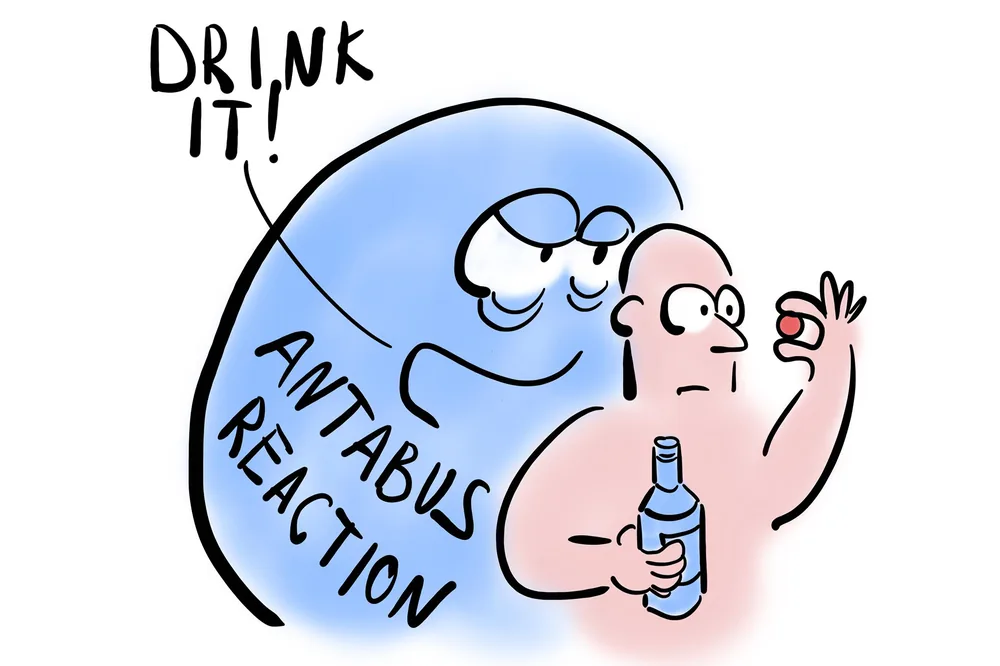
Stage 2 :  medications will be given to reduce the craving for alcohol and if the patient is suitable medication will be given which causes an unpleasant reaction if the patient drinks alcohol while on the medications.

During this stage cognitive behaviour therapy will be adviced which will help patient to stay away from alcohol and also handle the issues that lead to the person drinking alcohol.

Remember many people have gone through the treatment and have stopped alcohol permanently, you also can.

Can alcohol dependence be treated on outpatient basis?

Alcohol dependence can be treated on outpatient basis and it is as effective as in patient care. The patient must be motivated to stop alcohol and he must have a good support system.

Who should be admitted to a rehabilitation centre?

If a person has tried numerous times to stop drinking alcohol by himself, with medical supervision both outpatient and inpatient then it would be worth to try a rehabilitation center were the patient can stay for a few months.

Remember to admit the patient to a centre which has a psychiatrist supervising the treatment process and always do your research regarding the rehabilitation center before admitting the patient there.

[INSERT_ELEMENTOR id="9770"]

Premature (Early) Ejaculation

Psychiatry

Premature (Early) Ejaculation

Diagnostic Criteria

A) A persistent or recurrent pattern of ejaculation occurring during partnered sexual activity within approximately 1 minute following vaginal penetration and before the individual wishes it.

Note: Although the diagnosis of premature (early) ejaculation may be applied to individuals engaged in nonvaginal sexual activities, specific duration criteria have not been established for these activities.

B) The symptom in Criterion A must have been present for at least 6 months and must be experienced on almost all or all (approximately 75%-100%) occasions of sexual activity (in identified situational contexts or, if generalized, in all contexts).

C) The symptom in Criterion A causes clinically significant distress in the individual.

D) The sexual dysfunction is not better explained by a nonsexual mental disorder or as a consequence of severe relationship distress or other significant stressors and in not attributable to the effects of a substance/medication or another medical condition.

Specify whether:

Lifelong: The disturbance has been present since the individual became sexually active.

Acquired: The disturbance began after a period of relatively normal sexual function.

Specify whether:

Generalized: Not limited to certain types of stimulation, situation, or partners.

Situational: Only occurs with certain types of stimulation, situations, or partners.

Specify current severity:

Mild: Ejaculation occurring within approximately 30 seconds to 1 minute of vaginal penetration.

Moderate: Ejaculation occurring within approximately 15-30 seconds of vaginal penetration.

Severe: Ejaculation occurring prior to sexual activity, at the start of sexual activity, or within approximately 15 seconds of vaginal penetration

[INSERT_ELEMENTOR id="9770"]

Male Hypoactive Sexual Desire Disorder

Psychiatry

Male Hypoactive Sexual Desire Disorder

Diagnostic Criteria

  1. Persistently or recurrently deficient (or absent) sexual/erotic thoughts or fantasies and desire for sexual activity. The judgment of deficiency is made by the clinician, taking into account factors that affect sexual functioning, such as age and general and sociocultural contexts of the individual’s life.
  2. The symptoms in Criterion A have persisted for minimum duration of approximately 6 months.
  3. The symptoms in Criterion A cause clinically significant distress in the individual.
  4. The sexual dysfunction is not better explained by a nonsexual mental disorder or as a consequence of severe relationship distress or significant stressors and is not attributable to these effects of a substance/ medication or another medical condition.

Specify whether:

Lifelong: The disturbance has been present since the individual became sexually active.

Acquired: The disturbance began after a period of relatively normal sexual function.

Specify whether:

Generalized: Not limited to certain types of stimulation, situations, or partners.

Situational: Only occurs with certain types of stimulation, situations, or partners.

Specify current severity:

Mild: Evidence of mild distress over the symptoms in Criterion A.

Moderate: Evidence of moderate distress over the symptoms in Criterion A.

Severe: Evidence of severe or extreme distress over the symptoms in Criterion A.

[INSERT_ELEMENTOR id="9770"]

Female Sexual Interest/Arousal Disorder

Psychiatry

Female Sexual Interest/Arousal Disorder

Diagnostic Criteria

A) Lack of, or significantly reduced, sexual interest/arousal, as manifested by at least three of the following:

  1. Absent/reduced interest in sexual activity.
  2. Absent/reduced sexual/erotic thoughts or fantasies.
  3. No/reduced initiation of sexual activity, and typically unreceptive to a partner’s attempts to initiate.
  4. Absent/reduced sexual excitement/pleasure during sexual activity in almost all or all (approximately, 75%-100%) sexual encounters (in identified situational contexts or, if generalized, in all contexts).
  5. Absent/reduced sexual interest/arousal in response to any internal or external sexual/erotic cues (e.g., written, verbal, visual).
  6. Absent/reduced genital or no genital sensations during sexual activity in almost all or all (approximately 75%-100) sexual encounters (in identified situational contexts or, if generalized, in all contexts).

B) The symptoms in Criterion A have persisted for a minimum duration of approximately 6 months.

C) The symptoms in Criterion A cause clinically significant distress in the individual.

D) The sexual dysfunction is not better explained by a nonsexual mental disorder or as a consequence of severe relationship distress (e. g., partner violence) or other significant stressors and is not attributable to the effects of a substance/medication or another medical condition.

Specify whether:

Lifelong: The disturbance has been present since the individual became sexually active.

Acquired: The disturbance began after a period of relatively normal sexual function.

Specify whether:

Generalized: Not limited to certain types of stimulation, situations, or partners.

Situational: Only occurs with certain types of stimulation, situations, or partners.

Specify current severity:

Mild: Evidence of mild distress over the symptoms in Criterion A.

Moderate: Evidence of moderate distress over the symptoms in Criterion A.

Severe: Evidence of severe or extreme distress over the symptoms in Criterion A.

[INSERT_ELEMENTOR id="9770"]

Female Orgasmic Disorder

Psychiatry

Female Orgasmic Disorder

Diagnostic Criteria

A) Presence of either of the following symptoms and experienced on almost all or all (approximately 75%-100%) occasions of sexual activity (in identified situational contexts or, if generalized, in all contexts):

  1. Marked delay in, marked infrequency of, or absence of orgasm.
  2. Markedly reduced intensity of orgasmic sensations.

B) The symptoms in Criterion A have persisted for a minimum duration of approximately 6 months.

C) The symptoms in Criterion A cause clinically significant distress in the individual.

D) The sexual dysfunction is not better explained by a nonsexual mental disorder or as a consequence of severe relationship distress (e.g., partner violence) or other significant stressors and is not attributable to the effects of a substance/medication or another medical condition.

Specify whether:

Lifelong: The disturbance has been present since the individual became sexually active.

Acquired: The disturbance began after a period of relatively normal sexual function.

Specify whether:

Generalized: Not limited to certain types of stimulation, situations, or partners.

Situational: Only occurs with certain types of stimulation, situations, or partners.

Specify if:

Never experienced an orgasm under any situation.

Specify current severity:

Mild: Evidence of mild distress over the symptoms in Criterion A.

Moderate: Evidence of moderate distress over the symptoms in Criterion A.

Severe: Evidence of severe or extreme distress over the symptoms in Criterion A.

[INSERT_ELEMENTOR id="9770"]

Erectile Disorder

Psychiatry

Erectile Disorder

Diagnostic Criteria

A) At least one of the three following symptoms must be experienced on almost all or all (approximately 75%-100%) occasions of sexual activity (in identified situational contexts or, if generalized, in all contexts):

  1. Marked difficulty in obtaining an erection during sexual activity.
  2. Marked difficulty in maintaining an erection until the completion of sexual activity.
  3. Marked decrease in erectile rigidity.

B) The symptoms in Criterion A have persisted for minimum duration of approximately 6 months.

C) The symptoms in Criterion A cause clinically significant distress in the individual.

D) The sexual dysfunction is not better explained by a nonsexual mental disorder or as a consequence of severe relationship distress or other significant stressors and is not attributable to the effects of a substance/medication or another medical condition.

Specify Whether:

Lifelong: The disturbance has been present since the individual became sexually active.

Acquired: The disturbance began after a period of relatively normal sexual function.

Specify whether:

Generalized: Not limited to certain types of stimulation, situations, or partners.

Situational: Only occurs with certain types of stimulation, situations, or partners.

Specify current severity:

Mild: Evidence of mild distress over the symptoms in Criterion A.

Moderate: Evidence of moderate distress over the symptoms in Criterion A.

Severe: Evidence of severe or extreme distress over the symptoms in Criterion A.

[INSERT_ELEMENTOR id="9770"]

Delayed Ejaculation

Psychiatry

Delayed Ejaculation

Diagnostic Criteria

A) Either of the following symptoms must be experienced on almost all or all occasions (approximately 75%-100%) of partnered sexual activity (in identified situational contexts or, if generalized, in all contexts), and without the individual desiring delay:

  1. Marked delay in ejaculation.
  2. Marked infrequency or absence of ejaculation.

B) The symptoms in Criterion A have persisted for a minimum duration of approximately 6 months.

C) The symptoms in Criterion A cause clinically significant distress in the individual.

D) The sexual dysfunction is not better explained by a nonsexual mental disorder or as a consequence of severe relationship distress or other significant stressors and is not attributable to the effects of a substance/medication or another medical condition.

Specify whether:

Lifelong: The disturbance has been present since the individual became sexually active.

Acquired: The disturbance began after a period of relatively normal sexual function.

Specify whether:

Generalized: Not limited to certain types of stimulation, situation, or partners.

Situational: Only occurs with certain types of stimulation, situations, or partners.

Specify current severity:

Mild: Evidence of mild distress over the symptoms in Criterion A.

Moderate: Evidence of moderate distress over the symptoms in Criterion A.

Severe: Evidence of severe or extreme distress over the symptoms in Criterion A.

[INSERT_ELEMENTOR id="9770"]

Body Dysmorphic Disorder

Psychiatry

Body Dysmorphic Disorder

Diagnostic Criteria

  1. Preoccupation with one or more perceived defects or flaws in physical appearance that are not observable or appear slight to others.
  2. At some point during the course of the disorder, the individual has performed repetitive behaviors (e.g., mirror checking, excessive grooming, skin picking, reassurance seeking) or mental acts (e.g., comparing his or her appearance with that of others) in response to the appearance concerns.
  3. The preoccupation causes clinically significant distress or impairment in social, occupational, or other important areas of functioning.
  4. The appearance preoccupation is not better explained by concerns with body fat or weight in an individual whose symptoms meet diagnostic criteria for an eating disorder.

Specify if:

With Muscle dysmorphia: The individual is preoccupied with the idea that his or her body build is too small or insufficiently muscular. This specifier is used even if the individual is preoccupied with other body areas, which is often the case.

Specify if:

Indicate degree of insight regarding body dysmorphic beliefs (e.g. “I look ugly or deformed”)

With good of fair insight: The individual recognizes that the body dysmorphic disorder beliefs are definitely or probably not true or that they may or may not be true)

With poor insight: The individual thinks that the body dysmorphic disorder beliefs are probably true.

With absent insight /delusional beliefs: The individual is completely convinced that the body dysmorphic disorder beliefs are true.

[INSERT_ELEMENTOR id="9770"]

Hoarding Disorder

Psychiatry

Hoarding Disorder

Diagnostic Criteria

  1. Persistent difficulty discarding or parting with possessions, regardless of their actual value.
  2. This difficulty is due to a perceived need to save the items and to distress associated with discarding them.
  3. The difficulty discarding possessions results in the accumulation of possessions that congest and clutter active living areas and substantially compromises their intended use. If living areas are uncluttered, it is only because of the interventions of third parties (e.g., family members, cleaners, authorities).
  4. The hoarding causes clinically significant distress or impairment in social, occupational, or other important areas of functioning (including maintaining a safe environment for self and others).
  5. The hoarding is not attributable to another medical condition (e.g., brain injury, cerebrovascular disease, Prader-Willi syndrome).
  6. The hoarding is not better explained by the symptoms of another mental disorder (e.g., obsessions in obsessive-compulsive disorder, decreased energy in major depressive disorder, delusions in schizophrenia or another psychotic disorder, cognitive deficits in major neurocognitive disorder, restricted interests in autism spectrum disorder).

Specify if:

With excessive acquisition: If difficulty discarding possessions is accompanied by excessive acquisition of items that are not needed or for which there is no available space.

Specify if:

With good or fair insight: the individual recognizes that the hoarding related beliefs and behaviours (pertaining to difficulty in discarding items, clutter or excessive acquisition) are problematic.

With poor insight: The individual is mostly convinced that hoarding related beliefs and behaviours

(Pertaining to difficulty in discarding items, clutter or excessive acquisition) are not problematic despite evidence to the contrary.

With absent insight or delusional beliefs: The individual is completely convinced that hoarding related beliefs and behaviours (pertaining to difficulty in discarding items, clutter or excessive acquisition) are not problematic despite evidence to the contrary.

[INSERT_ELEMENTOR id="9770"]